As we decluttering our living spaces, finding the motivation to start and maintain progress can often feel daunting. However, by understanding the concept of traction and applying it to decluttering, we can unlock the potential to create organized spaces.
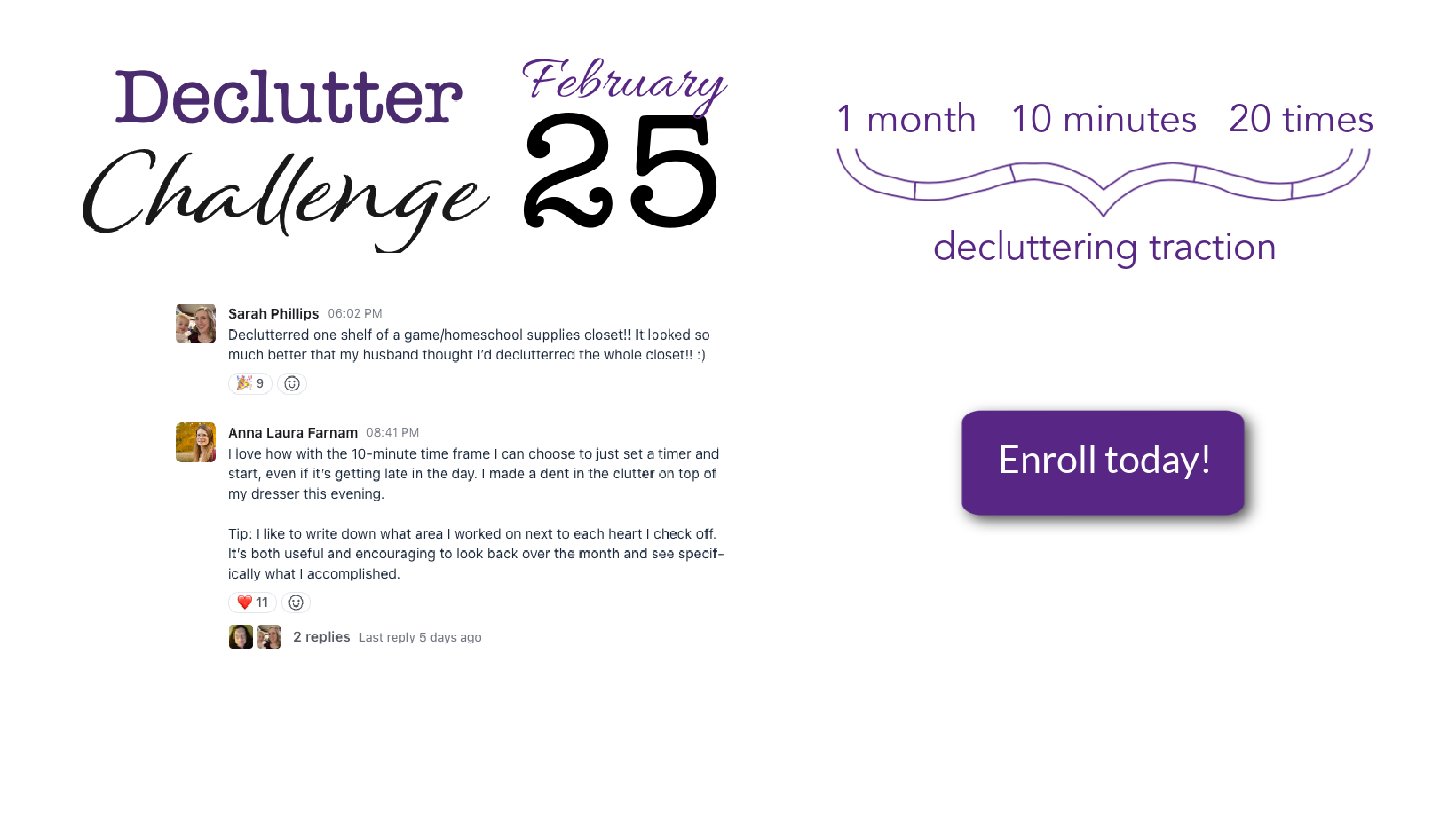
In February, during our annual Declutter Challenge, we discussed what decluttering traction looks and feels like and how to achieve it.
What is decluttering?
Decluttering is the process of removing unnecessary items, organizing belongings, and creating a sense of order and harmony within a space. It involves giving items designated homes, evaluating their purpose and importance, and making decisions about whether to discard, donate, or find appropriate storage for them.
Decluttering is an ongoing habit rather than a one-time project, requiring regular attention and maintenance to keep spaces free from unnecessary accumulation. We have to keep decluttering because we must adapt to the changing needs and demands of life.
Decluttering as a habit
Because our lives are constantly shifting and changing, and so does the stuff we accumulate. Just like paying bills or handling incoming mail, decluttering should become a regular practice so we can flex with our changing needs.
By dedicating small chunks of time, like 10-minute sessions, we can achieve surprising amounts of progress. In essence, decluttering becomes as natural as taking care of routine tasks like dishes and laundry.
Give everything a home
Dealing with items that don’t have a designated place to live creates a significant challenge. When decluttering, our goal should not merely be shifting piles from one spot to another but rather returning objects to their rightful places.
Moving clutter without addressing its underlying cause is merely wasting time. To make genuine progress, we need to identify which items lack a home within our living spaces. Then we can determine whether those things should be discarded, donated, or given a real home.
Tips for building a declutter habit
- Embrace decluttering as a habit, not a one-time project.
- Dedicate small, manageable chunks of time for decluttering sessions.
- Give items a designated home within your living space.
- Avoid simply moving clutter from one spot to another; focus on returning items to their rightful places.
- Recognize that clutter is a byproduct of functionality and an active, lived-in space.
- Establish a regular rhythm of tidying to prevent clutter from accumulating.
- Approach decluttering like peeling an onion, tackling one layer at a time.
- Use temporary homes, such as designated bins or containers, for items that frequently move or require temporary storage.
- Implement functional strategies to maintain order and organization.
- Understand the distinction between decluttering (removing unnecessary items) and organizing (arranging and storing items in an orderly manner).
- Take small steps consistently to create a path towards an organized and harmonious living space.
Acknowledging the temporary nature of clutter is essential in gaining traction in our decluttering efforts.
Just as a laundry room accumulates items due to its purpose, other areas of our homes collect possessions because they are being used.
Recognizing that clutter is a byproduct of a functional space in action reframes our perspective. Rather than perceiving it as a problem, we can embrace the rhythm of tidying up regularly, preventing clutter from accumulating and overwhelming us.
The onion approach to decluttering
We can grow in our decluttering responses by dealing with it in layers. Start with only a small step, what seems doable at the moment. Later, return for more.
By peeling away the layers of clutter, we gradually reveal the essence of organized spaces. This approach encourages us to start small and build momentum over time, ultimately leading to a less cluttered environment.
Decluttering isn’t organizing
Finally, it’s essential to understand the distinction between decluttering and organizing. While decluttering involves removing items that don’t belong in a particular space, organizing focuses on arranging and storing the items that do belong in a systematic manner.
Clearing a table is an act of decluttering, whereas organizing entails ensuring that the items on the table are arranged in an orderly fashion, so it is easier to find them when needed.
In the pursuit of decluttering traction, it is crucial to view decluttering as an ongoing habit, rather than a one-time project.
By giving items a home, recognizing the temporary nature of clutter, and implementing functional strategies, we can create organized and harmonious living spaces. Like peeling an onion, we approach decluttering one layer at a time, steadily revealing the peace of an organized home.