When our homes are a mess, when we don’t know what to do with all the stuff, when decluttering feels like its own never-ending job, then we get stuck and frustrated.
We think decluttering will solve our problems, but the pictures painted by tv shows, magazines, and Pinterest just don’t fit our own real life.
We need a method of decluttering that works with real, normal family life.
Kids need stuff to learn. Kids grow out of stuff and clothing. As mothers, we can joyfully accept stuff-management (including decluttering) as simply an everyday part of our job.
Decluttering is not some ideal, perfect state we can achieve if we just work hard enough.
Instead, decluttering is a habit we need to build and practice.
In the following workshop, you’ll learn
- What clutter really means.
- What it means to declutter a space.
- What to do when something seems like clutter to you but not to your kids.
- Why decluttering never seems finished.
- How to not be frustrated with the fact that you need to declutter.
- How to not be overwhelmed with decluttering.
- How to make decluttering a normal and natural part of your homemaking.
- Why you need to stop seeing decluttering as a project.
- How to actually enjoy the process of decluttering.
This workshop is for you if your home is a mess, if you feel stuck with too much stuff, if you hate decluttering, and if you can’t seem to get a grip on the accumulated junk in your home.
What is clutter?
- Clutter is not a synonym for junk.
- A thing that is clutter in one place might not be clutter another place.
- Whether junk or treasure, it’s clutter if it’s not put away.
- In order to not be clutter, a thing needs a home.
- In order to not be clutter, a thing needs to be in its home.
We think the approach to clutter we need is a strategy for dealing with it.
Our attitude about needing to deal with it needs adjusting first.
Dealing with the stuff in our homes is our job. It’s a big job!
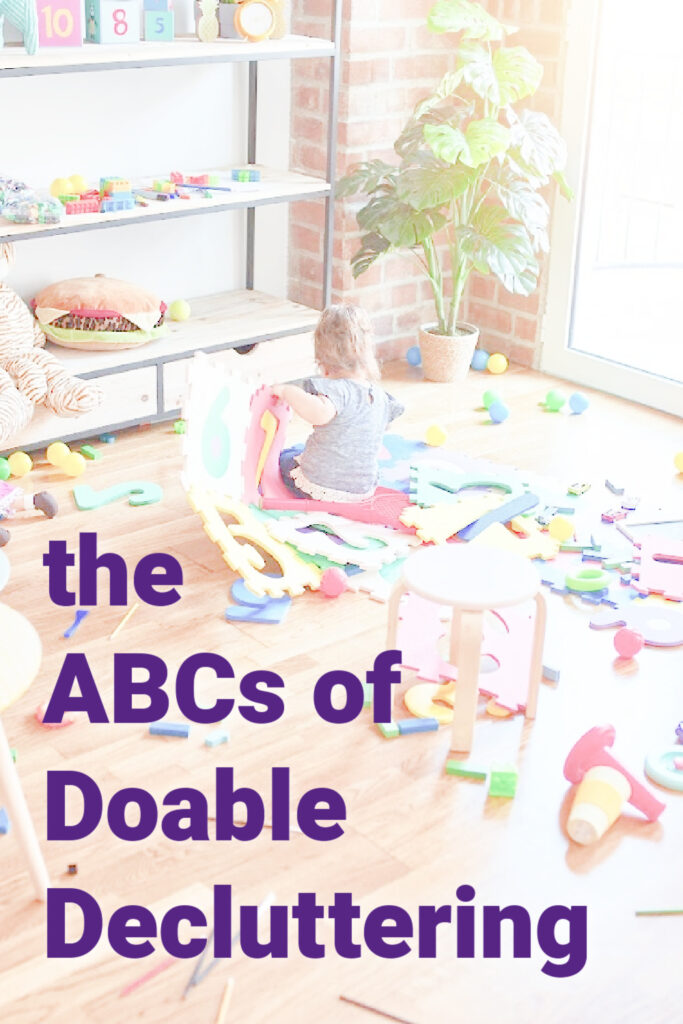
Our goal is to set the stage & manage the props, not achieve & keep perfection.
Decluttering is a habit, not a project.
Decluttering is managing stuff. It is part of homemaking.
You know what needs to be decluttered most of all?
Your mind.
I can help with that.
BRAIN DUMP
Clear your head of mental clutter.
- Reduce stress by getting your thoughts onto paper.
- Reduce frustration by assigning homes to everything.
- Reduce anxiety by knowing what you have on your plate.